
Yael: Behind the Story
No. 1 Behind the Story
Bricks Without Straw
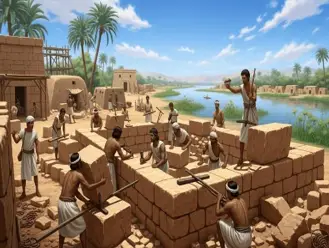
One of the first places readers encounter in Yael is the brick pits of Egypt. It isn’t an easy place to begin a story, but I wanted readers to experience the crushing weight of Israel’s bondage before witnessing the joy of God’s deliverance.
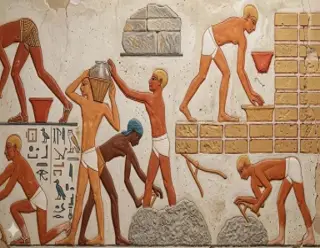
The Bible tells us that the Israelites served Pharaoh by making bricks for his building projects (Exodus 1:11-14). At first, they were provided with straw, an important ingredient that strengthened each brick by binding the clay together. Workers mixed mud, water, and chopped straw, packed the mixture into wooden molds, then left the bricks to dry beneath Egypt’s relentless sun.
Everything changed when Moses first confronted Pharaoh.
Instead of listening to God’s command to let His people go, Pharaoh made their work even harder. The Israelites were ordered to gather their own straw while producing the same number of bricks as before (Exodus 5:6-9). It wasn’t simply a heavier workload. It was an impossible demand designed to break both their bodies and their spirits.
As I imagined Yael’s early life, I often wondered what that felt like for an ordinary young woman. Scripture tells us what happened, but historical fiction invites us to consider the people who lived through it. How did families encourage one another after another exhausting day? What hopes did parents cling to as their children grew up in slavery? What did freedom even look like to someone who had never experienced it?
Those questions became part of Yael’s story.
Beginning in the brick pits also creates an important contrast. Readers first meet Yael surrounded by mud, labor, and oppression. By the end of her journey, she has stood at Mount Sinai, witnessed God’s presence, and traveled toward the Promised Land. The distance between those two places is measured by far more than miles. It is measured by God’s faithfulness.
Did You Know?
Archaeologists have uncovered countless mud bricks from ancient Egypt. Many still contain chopped straw, just as described in Exodus. Others, dating from different periods, contain reeds or stubble when straw became scarce, providing an intriguing reminder that the biblical description reflects authentic ancient brickmaking practices.
Every story begins with history. Imagination simply helps us walk through it.
No. 2 Behind the Story
Crossing the Sea
Few events in Scripture capture the imagination like Israel’s crossing of the Red Sea. It is one of the defining moments of the Old Testament, remembered not simply because the waters parted, but because God rescued an entire nation when escape seemed impossible.
When I came to this scene in Yael, I knew I didn’t want readers to experience it as spectators. I wanted them to stand among the people.
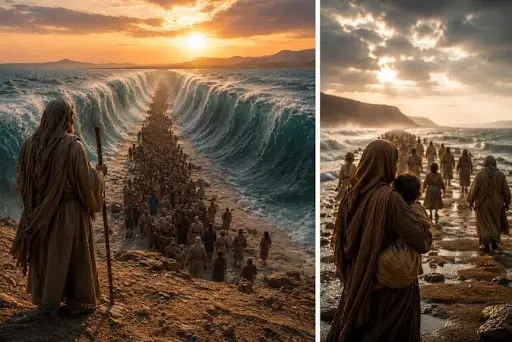
The Bible tells us what happened. Moses stretched out his hand over the sea, the Lord drove back the waters, and the Israelites crossed on dry ground while walls of water stood on either side of them (Exodus 14). It is a miracle that has inspired generations of believers.
But imagine experiencing that moment without knowing how the story would end.
Imagine hearing the thunder of Egyptian chariots growing louder behind you. Before you lies an uncrossable sea. Around you are frightened families clutching children, carrying the few possessions they could gather before leaving Egypt. Every direction seems to promise disaster.
Then God makes a way where no way exists.
As I wrote this chapter, I found myself thinking less about the miracle itself and more about the people witnessing it. Some must have stepped forward with confidence. Others likely hesitated until the last possible moment. Parents probably urged frightened children onward while glancing nervously over their shoulders. Elderly grandparents would have needed help navigating the uneven seabed. Livestock, wagons, and thousands upon thousands of people all moved together through a passage that only moments before had been underwater.
Those are the details Scripture doesn’t describe, yet they help us appreciate the magnitude of what God accomplished.
The crossing also marks a turning point in Yael’s life. Egypt represented everything familiar, even if it was a place of suffering. Once the sea closed behind Israel, there was no returning to the life they had known. Freedom meant trusting God in a future they could not yet see.
That truth still resonates today. God’s deliverance often asks us to leave behind what is familiar before we can fully embrace what He has prepared.
Did You Know?
The Bible never actually calls it the “Red Sea.” The Hebrew text uses the name Yam Suph, meaning “Sea of Reeds.” Scholars continue to debate its exact location, but Scripture is unmistakably clear about what happened there: God miraculously opened the waters, Israel crossed safely, and the pursuing Egyptian army was destroyed.
Every story begins with history. Imagination simply helps us walk through it.
No. 3 Behind the Story
Standing at Sinai
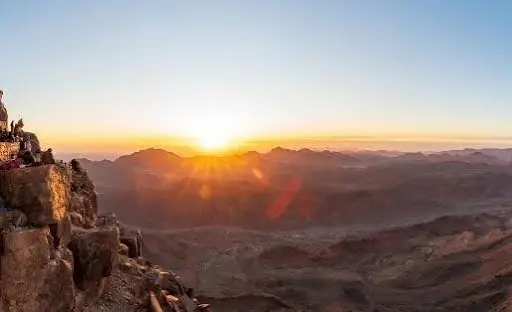
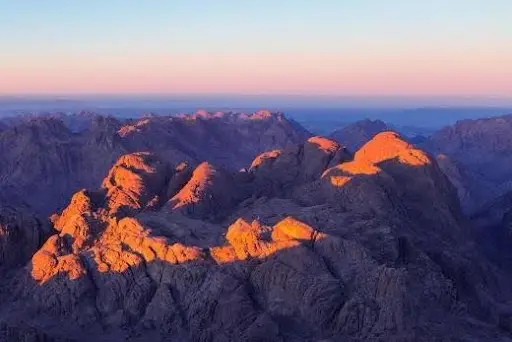
Every biblical novel has moments that feel larger than life. For Yael, none was greater than standing at the foot of Mount Sinai.
This wasn’t simply another stop on Israel’s journey. It was where a nation of former slaves became God’s covenant people.
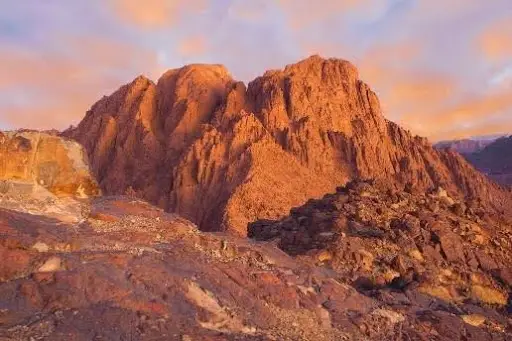
The Bible describes the scene with unforgettable imagery. Thunder rolled across the mountain. Lightning flashed through dark clouds. Smoke billowed upward as the Lord descended in fire. The sound of a trumpet grew louder and louder until the people trembled with awe (Exodus 19).
As dramatic as those events were, what captivated me most wasn’t what the people saw. It was what they learned.
For generations, the Hebrews had lived under the authority of Pharaoh. Their days had been governed by Egyptian masters, Egyptian laws, and Egyptian gods. Freedom from slavery was only the beginning. Israel also needed to learn what it meant to live as God’s people.
That is why Sinai matters.
Here, God revealed not only His power, but His character. He established a covenant with Israel, gave His commandments, and called the people to holiness. The laws they received weren’t intended to burden them. They were meant to shape a nation that reflected the justice, mercy, and faithfulness of the God who had redeemed them.
As I imagined Yael standing among the thousands gathered before the mountain, I wondered what she might have been thinking. Did she understand the significance of the moment? Did she feel excitement, fear, or both? Could anyone standing there fully grasp that these events would shape history for generations to come?
Those questions helped me write the scene through the eyes of an ordinary young woman witnessing an extraordinary encounter with God.
It’s easy to think of Sinai only as the place where the Ten Commandments were given. But it was much more than that. It was where God invited His people into a relationship with Himself. The commandments flowed from that relationship, not the other way around.
That perspective shaped how I wrote these chapters. I wanted readers to see Sinai not simply as a mountain wrapped in smoke, but as the place where God’s redeemed people began learning how to live with Him at the center of their lives.
Did You Know?
The traditional location of Mount Sinai has been identified with Jebel Musa in Egypt’s Sinai Peninsula for centuries, though several other sites have been proposed by scholars. While the mountain’s exact location remains uncertain, Scripture leaves no doubt about its significance. It was here that God established His covenant with Israel and revealed His law.
Every story begins with history. Imagination simply helps us walk through it.
No. 4 Behind the Story
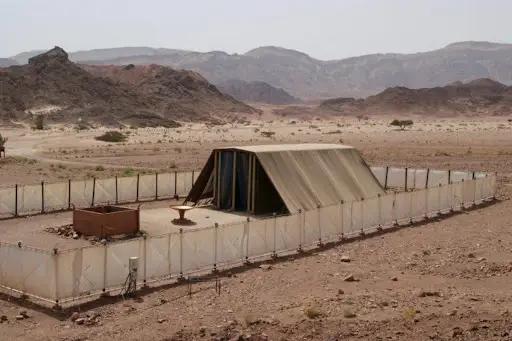
The Tabernacle
When readers think about the wilderness journey, they often remember the manna, the pillar of cloud, or the giving of the Ten Commandments. Yet one of the most remarkable gifts God gave Israel was something they carried with them every step of the way.
The Tabernacle.
At first glance, it may seem like an elaborate tent surrounded by priests and sacrifices. But it represented something far greater. It was the visible reminder that the God who had delivered Israel from Egypt had chosen to dwell among His people.
That truth shaped how I wrote these chapters in Yael.
The Bible devotes more chapters to the construction of the Tabernacle than many readers realize. God gave Moses detailed instructions for everything, from the dimensions of the curtains to the materials used for the Ark of the Covenant, the lampstand, the altar, and the priestly garments. Nothing was left to chance because every part of the Tabernacle reflected God’s holiness and pointed to His desire to live among His covenant people.
As I researched these passages, I was struck by another detail.
The Israelites had been slaves only months before.
Most had never built anything of their own. Yet God invited them to contribute their skills, their craftsmanship, and their possessions to build a sanctuary for His presence. Gold and silver that had once symbolized Egypt’s wealth were now dedicated to the worship of the Lord. Former slaves became artisans, weavers, woodworkers, metalworkers, and craftsmen, united in a work that honored God.
That transformation fascinated me.
When I imagined Yael watching the Tabernacle take shape, I pictured more than a construction project. I pictured a community discovering that every willing hand had something to offer. Some spun fine linen. Others carved acacia wood. Still others hammered gold into beautiful works of craftsmanship. Each task mattered because each contributed to the place where God would meet with His people.
The Tabernacle also reminded Israel of something they desperately needed to remember.
God had not simply rescued them from Egypt.
He had rescued them for Himself.
Every time the camp was arranged around the Tabernacle, every time the cloud rested above it, and every time the people packed it for another journey, they were reminded that God’s presence belonged at the center of their lives.
That became one of the themes I wanted woven quietly throughout Yael. The greatest treasure Israel carried through the wilderness wasn’t found in wagons or possessions.
It was the assurance that God was with them.
Did You Know?
The Tabernacle remained Israel’s central place of worship for centuries, long before Solomon built the Temple in Jerusalem. Its design wasn’t replaced by the Temple. Rather, the Temple reflected many of the same patterns God first revealed to Moses in the wilderness.
Every story begins with history. Imagination simply helps us walk through it.
No. 5 Behind the Story
The Edge of the Promise
Every journey has a destination.
For Yael, that destination is the Promised Land.
From the moment Moses first spoke God’s promise in Egypt, Canaan represented freedom, hope, and a future unlike anything the Israelites had ever known. It was described as “a land flowing with milk and honey,” not because milk and honey literally flowed through its valleys, but because the phrase painted a picture of abundance, fertile pastures, productive fields, and a place where families could finally put down roots.
Yet by the time Israel reached its border, the journey had become about far more than geography.
The people who stood overlooking Canaan were not the same people who had marched out of Egypt. They had crossed the sea, received God’s covenant at Sinai, built the Tabernacle, learned to depend on manna, and witnessed God’s provision through countless trials. Freedom had changed them.
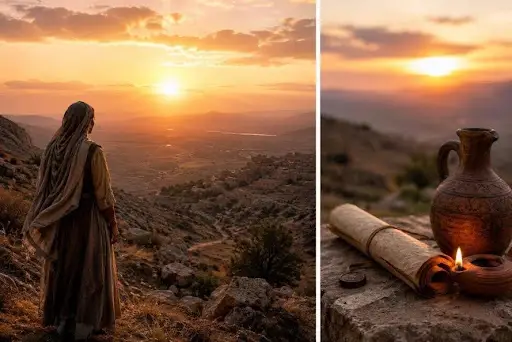
As I wrote the closing chapters of Yael, I often found myself imagining what it must have been like to catch that first glimpse of the hills beyond the Jordan. Did parents point toward the distant valleys and tell their children, “That’s where we’ll live”? Did young people dream about vineyards they had never seen or homes they had never owned? How many quietly thanked God for bringing them this far?
Those thoughts became part of Yael’s story.
Standing on the edge of the Promised Land also reminds us that God’s promises often unfold one step at a time. Israel had longed for this moment, yet entering the land would require faith and courage just as surely as leaving Egypt had.
That truth still speaks to us today.
God’s promises are rarely fulfilled all at once. He prepares His people through the journey before He entrusts them with the destination.
For Yael, the edge of Canaan is more than the end of one story.
It is the beginning of another.
Did You Know?
The Bible uses the phrase “a land flowing with milk and honey” more than twenty times. It wasn’t meant to describe luxury. It described a land capable of supporting healthy flocks, productive agriculture, and settled communities, a dramatic contrast to the harsh conditions Israel had experienced in Egypt and the wilderness.
Every story begins with history. Imagination simply helps us walk through it.